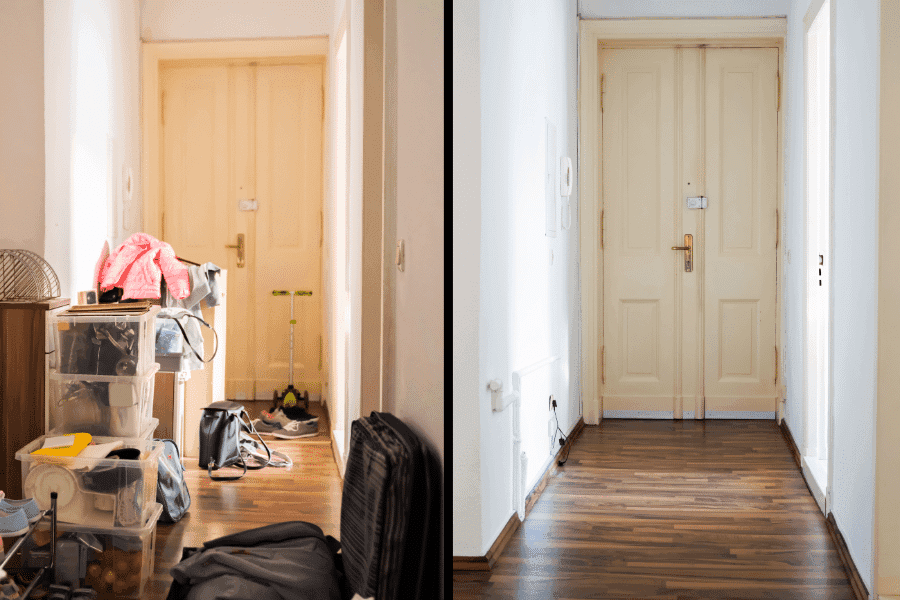
Can’t find your keys? Tripping over boxes in the garage? That storage unit you’ve been paying for since… well, you can’t remember when?
Trust us, you’re not alone. While you’re out there working hard for a living, shuttling kids around, and/or caring for aging parents, clutter has a sneaky way of piling up. And it’s doing more than just taking up space – it’s actually messing with your stress levels and productivity.
But here’s the good news: you don’t need to spend your precious weekends drowning in boxes and old furniture. We’ve put together this no-nonsense guide to help you reclaim your space (and your peace of mind) with smart decluttering in 2026.
The Frederick, MD Reality: Clutter Builds Up Fast Around Here, And It’s Not All Your Fault.
Around Frederick County, junk builds up for a few simple reasons: homes have basements and garages (which turn into default storage), seasons change (so you’ve got gear for every kind of weather), and life stays busy. Between work, kids, and everything else, it’s easy to toss things in a corner and tell yourself you’ll worry about it later.
Then one day you realize the garage can’t fit a car, the basement is packed wall-to-wall, and the “donation pile” has become permanent furniture.
The Real Impact of Clutter on Your Well-being
According to WebMD’s August 2023 report, women who saw their homes as cluttered had significantly higher levels of cortisol (the stress hormone) throughout the day. A UCLA study also found a direct link between high cortisol levels and how many things you have. Chronically high stress levels have been linked with all sorts of health problems from heart disease to arthritis to mood disorders.
The good news? As unmanageable as your situation might feel right now. Clutter is within your control. And decluttering can make a world of difference in your quality of life! Forbes reported in July 2023 that reducing unwanted items does more than just clear your home – it actually gives your brain an “instant therapeutic boost” by minimizing distractions and allowing better concentration.
Why Clutter Costs You More Than Space
Unwanted junk doesn’t just sit there—it quietly drains you. You waste time looking for stuff, re-buying things you already own, and working around piles that shouldn’t be there in the first place. And if you’re paying for a storage unit “just for now,” that’s money leaving your pocket every month for stuff you don’t even use.
Bottom line: decluttering is one of the fastest ways to make your home easier to live in—and stop bleeding time and cash.
Simple, Science-Backed Strategies for Decluttering
That’s it! You’ve made the decision: it’s finally time to get your home under control. You might not need to call in the pro organizers, but you may need a little extra help wrapping your head around the best way to approach the decluttering process.
Here are a few strategies to get you started:
- The 15-Minute Method: Psychology Today confirms that short, focused decluttering sessions are more effective than marathon cleaning sessions. Start with just 15 minutes a day – perfect for busy professionals!
- The Three-Box System: Decision fatigue is real when it comes to decluttering, which is why the three-box system is so brilliant—it limits your choices of what to do with each item to three options and no more. Here’s how it works: pick a room (see below for a list of places to start) and go item by item, keeping it where it is or putting it in the appropriate box – donate, trash, or relocate to another place in the house. Easy peasy. Have questions about this method? Check out this podcast/article on the three box method from Learn Do Become.
- Make A Plan: Your calendar is your friend. Help fuel your motivation by picking a date in the future and scheduling junk removal pickup, inviting friends over for dinner, or asking a friend to help you declutter (source).
What to Declutter First (Fast Wins That Build Momentum)
If you’re overwhelmed, don’t start with the hardest tasks. Start with the easiest things, where you’ll feel the win right away. Here are some ideas to kick-start your motivation:
- Digital chaos: The overflowing email inbox, the unused apps on your phone, the subscriptions you never use that slowly bleed your bank account. Log in and start deleting for a near-instant sense of accomplishment and significantly less mental clutter.
- Your main living areas: Where do you hang out most in your home? Clear these rooms out first so you have a peaceful haven while you tackle the rest of the house. Closets can wait.
- Entryway / drop zone: Shoes, coats, bags, and junk mail piles create daily stress fast.
- Kitchen counters: Clear counters make the whole house feel cleaner.
Next Things to Declutter (Serious Problem Areas and Other Headaches)
Once you’ve knocked out the easy wins, it’s time to go after the stuff that’s been quietly taking up real estate for years. These areas aren’t always “hard,” but they tend to be where junk hides—and where you’ll get a huge payoff once they’re cleared.
The fridge:
How many times a day do you open your fridge? Exactly. If every time you reach for milk you’re staring at old takeout containers, mystery leftovers, and expired salad dressing, that’s stress you don’t need. Toss what’s bad, wipe the shelves, and group the “everyday” stuff where you can actually see it. This is one of those decluttering wins you’ll feel immediately—multiple times a day.
Bathroom cabinets + linen closet:
These spots collect stuff fast because they’re out of sight. Go through the half-used bottles, expired products, old makeup, and the towels you don’t even like. If it’s expired, empty, or you wouldn’t buy it again, let it go. Then keep only what you actually use up front so you’re not digging around every morning.
The “junk drawer” and paper piles:
This is where random life stuff goes to hide: expired coupons, takeout menus, mystery keys, old magazines, manuals, and cords that may or may not belong to anything. Do a quick sort into trash, donate, and relocate—and then give the “keep” items a real home. If you want to make this stick, label one small bin for “important papers” like bank statements, so they stop spreading across the counter. It’s a small area, but it makes your whole house feel less chaotic.
Kids’ stuff (toys, clothes, school papers):
Kids’ clutter multiplies overnight, and it’s usually the stuff they don’t even care about anymore. If it’s broken, missing pieces, or hasn’t been touched in months, it’s probably not coming back into rotation. Pull out what they’ve outgrown, keep what they actually use, and donate the rest. Bonus tip: save a small “memory box” for the handful of school papers worth keeping so you’re not drowning in artwork.
Garage + basement walkways:
You don’t have to tackle the whole garage or basement in one day. Start by clearing the walkways so the area is usable again and safer to move through. Once you’ve got clear paths, it’s easier to sort the piles without feeling trapped by them. Think progress, not perfection—your goal is to reclaim your home one section at a time.
The “maybe” furniture:
This is the stuff you’re saving “just in case”: chairs, dressers, tables, shelves—usually sitting in a basement corner collecting dust. If you haven’t used it in a year (or you don’t even like it), it’s not serving you—it’s just taking up room. Be honest: would you put it in your house today if it were free? If not, it’s time to donate it, sell it, or schedule a haul-away.
Storage unit reality check:
A storage unit feels like a solution… until you realize you’re paying rent on stuff you don’t need. If you haven’t opened those bins in a year, you’re basically paying monthly to avoid making decisions. Set a deadline, go through it once, and keep only what truly matters. The goal is to stop the monthly bleed and bring your “stored life” back under control.
Holiday decor:
Holiday bins are sneaky because you only deal with them once a year—so broken ornaments and tangled lights stick around forever. If it’s cracked, missing pieces, or the lights never work, don’t store it for another year out of guilt. Keep what you actually put up and enjoy, and donate the rest if it’s still usable. Next season, you’ll decorate faster, with less mess, and way less frustration.
Thoughts That Can Keep You Stuck
Most clutter doesn’t stick around because you’re inherently lazy or messy—it sticks around because of the little thoughts that pop up every time you try to get rid of something. You pick it up, you hesitate, and your brain hits you with a reason to keep it. Multiply that by a few hundred items, and suddenly nothing leaves the house.
Here are the most common “stuck” thoughts (and how to push past them):
- “It still works.” If it’s been sitting unused for years, it’s not helping you. Someone else can use it—or it’s time for it to go.
- “I might need it someday.” Maybe. But if it’s costing you space and peace of mind today, that “someday” is expensive. If you can re-buy it later on for less than $20 (here’s looking at you, cabinet full of reusable water bottles), let it go.
- “It was a gift.” Sentimentality loses its value when you don’t absolutely love or use the gift. You can appreciate the giver and the thought behind the gift without keeping it around. Let it go.
- “I don’t know how to get rid of it.” This is the #1 reason clutter stays. Furniture, mattresses, old appliances, broken shelving—most folks don’t have a truck (or the time) to deal with it.
Decluttering for Big Life Changes (Moves, Downsizing, Estates)
Some decluttering isn’t “spring cleaning.” It’s life happening.
If you’re navigating a move, downsizing, an estate cleanout, prepping a home for sale, or cleaning out after tenants—give yourself some grace. This stuff can be emotional and time-sensitive.
A simple way to handle it:
- Keep the essentials
- Donate what’s usable
- Remove the rest fast
It is possible to move forward without staring at piles for months, especially when you resolve not to tackle everything alone. Call in the help of family members or professionals for emotional support, to counteract decision fatigue, and to help with the physical labor.
When It Makes Sense to Call the Junk Removal Pros
Sometimes the smartest move is bringing in help—especially when you’re short on time or staring down a few heavy items.
Professional junk removal helps because:
- It gives you a deadline (which creates real momentum)
- It saves your back, your time, and your weekend
- You don’t have to figure out donation runs, dump trips, or what fits in your vehicle
Once you’ve decided what’s going, the fastest way to finish the job is to get it hauled out.
Why Choose Always Recovering Junk?
At Always Recovering Junk, we provide a top quality, local junk removal service that’s always on time and on budget. We offer:
- Full-service junk removal
- Pickup indoors or out – just point and we’ll take it from there for no extra cost.
- Donation, recycling, or disposal of unwanted items as appropriate
- Fully licensed & insured team for your peace of mind
- Transparent pricing with no hidden fees
- Free estimates – request a free, no obilgation quote today
But don’t take our word for it! See what our customers say on our reviews page.
Making it Last: The Maintenance Plan
Maybe you feel discouraged because other decluttering attempts in the past didn’t stick. No sooner were you back from your final Goodwill run than the stuff started piling up again. The key to maintaining a clutter-free space isn’t about the latest hacks or perfect organization – it’s about building sustainable daily habits that fit into your busy life.
- Spend 10 minutes each evening resetting your main living spaces
- One-In-One-Out: when you acquire something new, get rid of something old.
- Sort mail and papers as they come in
And here’s the part most people skip: get the whole household on the same page. If it’s only you trying to keep things tidy while everyone else keeps bringing clutter in, it’s going to feel like you’re bailing out a boat with a spoon. Schedule a quick family meeting and go over the new plan: where things go, what gets tossed, and what the daily reset looks like. When everyone has a role, it stops being “mom’s job” and starts being the way your home runs.
Ready to Transform Your Space and Mind in 2026?
Decluttering isn’t just about tidiness – it’s about investing in your mental health and productivity. When you’re ready to take that first step toward a cleaner space and clearer mind, Always Recovering Junk is here to help. Contact us today at 301-300-5819 for your free quote